


Innovating in Asia Study 2023
The Asian Century: Asia is taking its position as a dominant force on the world stage.
Asia experienced a significant economic transformation over the past two decades. Its GDP is expected to expand to $39 trillion in 2023, exceeding the US and Europe combined. A new middle class of more than 2 billion people has emerged as consumers and as innovators and innovation efforts are shifting rapidly from “global for Asia” to “Asia for Asia” as multinational companies seek to defend themselves against local competitors.

Read Full Content

AGP Insights
Download PDF.
Your PDF report was sent successfully to your inbox!
Related Insights.

Insights
AGP China Robotics Report - Cleaning Robots
The cleaning robot industry stands as a transformative force within the broader robotics sector, marked by its rapid technological advancements and significant market growth. The global cleaning robot market is projected to expand from USD 5.98 billion in 2024 to USD 21.01 billion by 2030, exhibiting a compound annual growth rate (CAGR) of 23.7%. This growth underscores the strategic importance of cleaning robots in enhancing operational efficiency across various sectors, including residential, commercial, and industrial environments.
Technological progress, particularly in artificial intelligence and machine learning, has enabled cleaning robots to perform tasks with greater autonomy and precision. Innovations such as SLAM-based navigation and multi- sensor fusion have equipped these robots to navigate complex environments and handle diverse cleaning tasks effectively. These advancements have not only improved productivity but also broadened the application of cleaning robots, making

Insights
China AI Playbook: Bottlenecks, Enablers & Manager Decisions to Scale
China’s competitive bar for enterprise AI has moved from “can we pilot this?” to “can we ship outcomes safely, at speed, and keep improving them?”
In China, local competitors are already doing this. They are embedding AI into core workflows, iterating quickly, and converting adoption into cycle-time gains, productivity improvements, and lower unit costs.
The signals are clear: if you move at pilot speed while competitors ship at production speed, you fall behind in cost, responsiveness, and talent attraction.

Insights
Tactics to Validate Product-Market Fit
The three most common ways that entrepreneurs can establish product market fit are: Proof of Concept (PoC), Prototype, and Minimum Viable Product (MVP). The purpose of this article is to reduce confusion about which approach to use based on your validation goals and stage of product development. First, let’s define the concepts.

Insights
APAC: Leveraging AI at Scale to Drive Value
The Asia Pacific (APAC) region is witnessing a shift from experimental AI projects to strategic deployments aimed at maximizing business impact.
This strategic pivot is driven by the understanding that AI's true value lies in its ability to enhance customer experience, automate back-office processes, and streamline sales and customer lifecycle management, as outlined in the "APAC AI Outlook 2025" report, a joint initiative by Ecosystm and IBM.
Insights
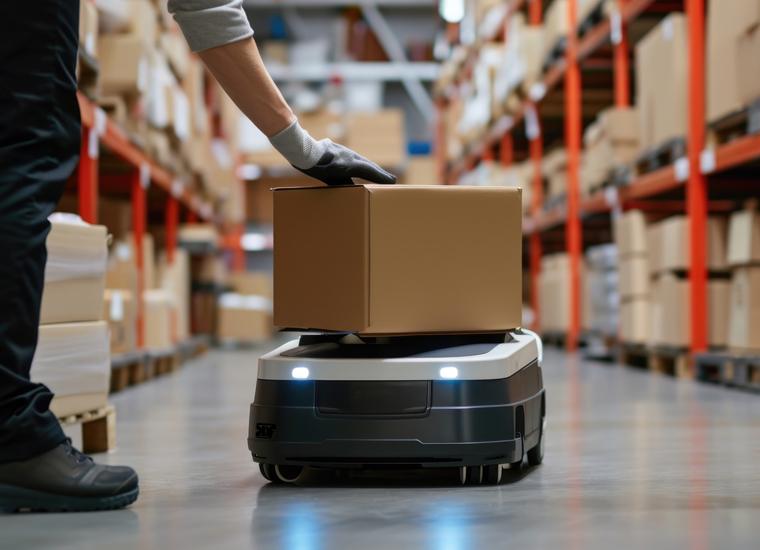
AGP China Robotics Report - Logistics & Warehouse Robots
The integration of logistics and warehouse robotics is pivotal within China's national innovation agenda, reflecting an ambition to fortify its position as a global leader in automation technology. The implementation of these technologies addresses labor shortages and rising costs, while simultaneously supporting the burgeoning e- commerce sector. China's strategic investments and advancements in this field have made it a formidable player on the world stage.
Technological advancements in robotics, artificial intelligence (AI), and machine learning have driven significant product differentiation and ecosystem development within China's logistics sector. The deployment of autonomous mobile robots (AMRs) and automated guided vehicles (AGVs) has transformed operations such as picking, sorting, and transportation, thereby increasing efficiency and reducing costs. For example, companies like Cainiao utilize AI-powered robots to streamline delivery routes and enhance supply chain efficiency

Insights
Ruhlamat's Journey to Industry 4.0: Lessons in Digital Transformation
As the manufacturing sector moves towards Industry 4.0, digital transformation is becoming essential for businesses to stay competitive. But how can traditional machine builders and automation companies navigate this new era? Ruhlamat's journey provides answers. In this article we dive into their journey and highlight the key factors that enable them to consistently outgrow the market.
